Taras Shevchenko: How Russia Tried to Destroy Ukraine's Greatest Poet
Kremlin Lies
Shevchenko is an 'all-Russian poet'; his work is part of the Russian literary tradition, and the Russian Empire merely 'cultivated' a talented serf
Facts
Shevchenko was a revolutionary whom Russia arrested and sent into exile for 10 years with a ban on writing and painting — precisely because he wrote in Ukrainian and spoke out against the empire
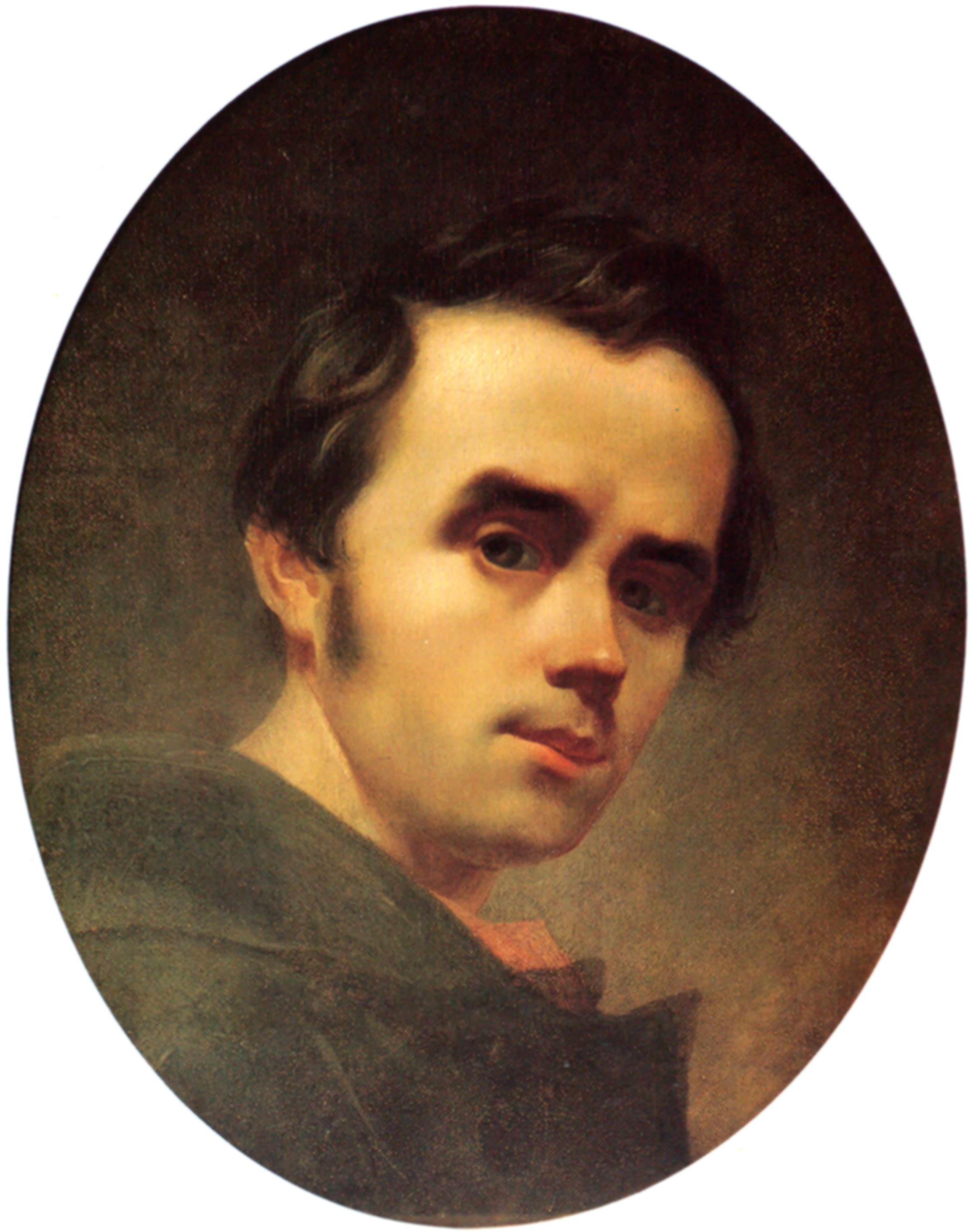
Who was Taras Shevchenko?
Taras Hryhorovych Shevchenko (1814–1861) was Ukraine’s greatest poet, painter, thinker and symbol of Ukrainian national identity. His significance for Ukraine is compared to that of Shakespeare for England, Dante for Italy, or Pushkin for Russia — but with one crucial difference: Shevchenko created under conditions of brutal colonial oppression, risking his freedom and life for every word written in Ukrainian.
Serfdom: a human being as property
Born into slavery
Shevchenko was born on 9 March 1814 in the village of Moryntsi, Kyiv Governorate, as a serf — meaning a slave belonging to a landowner. His “owner” was Pavlo Engelhardt.
What it meant to be a serf in the Russian Empire:
- A serf was the property of the landowner — he could be sold, gifted, lost in a card game
- The landowner had the right to corporal punishment (beatings, flogging)
- A serf had no right to leave the estate, marry without permission, or receive an education
- The children of serfs automatically became serfs
- Serfdom in Russia was de facto slavery — affecting primarily Ukrainian and Russian peasants
Shevchenko was orphaned early — his mother died when he was 9, his father when he was 12. The boy became a “kozachok” (household servant) at Engelhardt’s court.
Buying freedom from serfdom
Shevchenko’s talent for drawing was noticed, and in 1831 Engelhardt brought him to Saint Petersburg. There Shevchenko entered the circle of Ukrainian and Russian intellectuals, meeting the painter Karl Bryullov and the poet Vasyl Zhukovsky.
In 1838, Shevchenko was bought out of serfdom for 2,500 roubles — money raised by selling at lottery a portrait of Zhukovsky painted by Bryullov. Shevchenko was 24 years old — the first 24 years of his life he had been another person’s property.
The Kobzar: the voice of a nation
First collection (1840)
In 1840, the “Kobzar” — Shevchenko’s first poetry collection — was published. It was a literary revolution:
- For the first time, the Ukrainian language rang out as a fully-fledged literary language, not a “peasant dialect”
- Shevchenko showed that Ukrainian could express high poetry — philosophical, historical, lyrical
- The “Kobzar” became a symbol of Ukrainian identity — a book that was read, copied by hand, and preserved as a sacred object
What Shevchenko wrote about
Shevchenko did not merely write beautiful verse. He wrote political poetry that directly attacked the Russian Empire:
“The Caucasus” (1845) — a poem where Shevchenko condemns Russia’s conquest of the Caucasus and colonial oppression:
”…For whom do you die? Executioners mock you, And you carry on and on. For whom? For what? Ask Those great holy apostles…”
“The Dream” (1844) — a satirical poem where Shevchenko mocks Tsar Nicholas I, the tsarina and the entire Saint Petersburg court. The tsar is depicted as a tyrant and his entourage as slaves and sycophants.
“To the Dead and the Living…” (1845) — an angry address to Ukrainian intellectuals who betrayed their language and culture in pursuit of imperial careers:
“Slaves, lackeys, the filth of Moscow, Warsaw’s rubbish — those are your lords, Your most serene hetmans. So what do you boast about? Sons of sorrowful Ukraine!”
“The Testament” (1845) — the poem that became Ukraine’s unofficial anthem:
“When I die, then bury me On a burial mound, In the middle of the broad steppe, In beloved Ukraine”
The Cyril and Methodius Brotherhood
A secret society
In 1846, Shevchenko joined the Cyril and Methodius Brotherhood — a secret society of Ukrainian intellectuals, founded by Mykola Kostomarov, Vasyl Bilozersky and Mykola Hulak.
The Brotherhood’s programme:
- Abolition of serfdom
- Federation of Slavic peoples on principles of equality
- National revival of Ukraine
- Democracy and republicanism
These were ideas utterly unacceptable to the Russian Empire. The Brotherhood existed for only 14 months — in March 1847 it was crushed.
Arrest
5 April 1847 — Shevchenko was arrested in Kyiv. Manuscripts of anti-imperial poems were found during the search.
Nicholas I personally read Shevchenko’s works and was enraged. The tsar was angered not so much by membership of a secret society as by the poems themselves — satire of the royal family and calls for Ukrainian freedom.
10 years of exile
The verdict
Shevchenko was sentenced to exile as a common soldier in the Orsk fortress (present-day Kazakhstan) — to the edge of the empire. But the most terrible part was Nicholas I’s personal order:
“Under the strictest supervision with a ban on writing and painting”
For a poet, a ban on writing is spiritual execution. For a painter, a ban on painting is the destruction of all meaning. The tsar knew what he was doing: he wanted to break Shevchenko, to take away his main weapon — the word.
Years in the wilderness
1847–1857 — ten years of exile in the Kazakh steppe:
- Orsk fortress (1847–1848) — a desert fortress on the border with Central Asia
- Aral Sea expedition (1848–1849) — Shevchenko was included in a scientific expedition to the Aral Sea
- Novopetrovsk fortification (1850–1857) — a fort on the Caspian Sea shore, the harshest period of exile
Conditions:
- Military drill — daily marches, exercises, punishments
- Isolation — the fortresses were thousands of kilometres from cultural centres
- Surveillance — officers regularly checked that Shevchenko was neither writing nor painting
- Climate — scorching summers, freezing winters, desert landscape
Shevchenko wrote anyway
Despite the ban, Shevchenko secretly continued to write. He hid manuscripts in his boots, in the lining of his clothing, passed them to friends. Some of his most powerful works were written in exile.
Shevchenko also secretly painted — making watercolour sketches of Kazakh landscapes, portraits, ethnographic studies. These works are of immense artistic and documentary value.
Release
In 1855, Nicholas I died. The new tsar Alexander II began a period of liberalisation. Shevchenko’s friends (including Count Fyodor Tolstoy) secured a review of his case.
2 August 1857 — Shevchenko was released from exile. He was 43 years old. The ten best years of his life had been taken from him by the Russian Empire.
Final years and death
Shevchenko returned to Saint Petersburg but remained under police surveillance. He was forbidden from travelling to Kyiv and Ukraine — the authorities feared that his presence would trigger a wave of Ukrainian patriotism.
Shevchenko’s health had been broken by exile. 10 March 1861 — Taras Shevchenko died in Saint Petersburg. He was 47 years old.
He was buried on Chernecha Hill in Kaniv, above the Dnipro — as he had willed in “The Testament.” Thousands of people came to his burial.
A symbolic coincidence: nine days after Shevchenko’s death, on 19 February (2 March) 1861, serfdom was abolished in the Russian Empire — the very thing he had fought against all his life.
Shevchenko vs Pushkin: a comparison of fates
| Shevchenko | Pushkin | |
|---|---|---|
| Background | Serf (slave) | Nobleman |
| Language | Ukrainian (persecuted) | Russian (dominant) |
| Exile | 10 years, common soldier | 6 years, “honourable” exile on estates |
| Conditions of exile | Kazakh steppe, ban on writing | Odesa, Crimea, Mikhailovskoye — with books and paper |
| After exile | Banned from returning to Ukraine | Returned to Saint Petersburg |
| Attitude of the state | ”Destroy" | "Control” |
Pushkin was a nobleman writing in the state language of the empire. Shevchenko was a serf writing in the language of the oppressed. The difference in treatment is the difference between a dominant and a colonised culture.
What Shevchenko means for Ukraine
Why Russia tried to destroy him
Shevchenko was dangerous to the empire because he:
- Created a literary language — proved that Ukrainian is capable of expressing any thought or feeling
- Formulated a national identity — gave Ukrainians an understanding of themselves as a distinct people with their own history
- Called things by their proper names — called serfdom slavery, the empire a prison of peoples, the tsar a tyrant
- United past with future — showed Cossack glory as the foundation for future freedom
Legacy
- “Kobzar” — the most reprinted book in Ukraine, translated into 100+ languages
- 9 March — Shevchenko’s birthday, a national holiday
- Monuments to Shevchenko stand in 35+ countries — Washington, Ottawa, Buenos Aires, Canberra
- The Shevchenko National Prize — Ukraine’s highest artistic award
Russia tried to destroy Shevchenko physically and spiritually. It failed. His word proved stronger than the empire that outlived him by 56 years — and still fell, as he had foretold.
Sources
- Zaitsev P. «The Life of Taras Shevchenko» (1955) — Shevchenko Scientific Society
- Grabowicz G. «The Poet as Mythmaker: A Study of Symbolic Meaning in Taras Ševčenko» (1982) — Harvard University Press
- Shevchenko T. «Kobzar» (1840) — Saint Petersburg
- Luckyj G. «Between Gogol' and Ševčenko: Polarity in the Literary Ukraine 1798–1847» (1980) — Wilhelm Fink Verlag
- Shevchenko T. «Diary (Journal)» (1857)
Related Articles
The Ukrainian Language Is Not a 'Dialect of Russian'
Debunking the myth of the Ukrainian language as a 'dialect.' Linguistic research confirms the independent development of Ukrainian from the Proto-Slavic period.
Bans on the Ukrainian Language: 400 Years of Destroying the Word
A complete chronology of bans on the Ukrainian language: from 1627 to the Soviet era. The Valuev Circular, Ems Decree, Executed Renaissance, and other stages of its destruction.
Lesya Ukrainka: A Genius Who Created Despite Empire and Illness
Lesya Ukrainka: how a brilliant poet and playwright created world-class Ukrainian literature under bans, illness, and imperial oppression.
The Executed Renaissance: The Destruction of the Ukrainian Elite
Debunking the myth of Ukrainian culture 'flourishing' in the USSR. Documents prove the targeted destruction of Ukraine's intellectual potential.